Shading Drills
Like a musician practices, so should the artist. If you want to become proficient at your art, then you must pay for proficiency with hard work. Do your work.
Assignments for Shading Drills
Practice shading drills in your drawing notebook often. Practice daily if possible. Practice with both ink and pencil. Use a fine point ink pen or a pen with a fine nib. Below are several examples of what I want you to do.
This content requires a subscription to either Basic or YoungMinds.
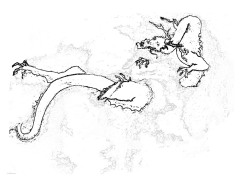
Fix This Dragon
Donna Young's Dragon Drawing from 1977
Use various shading techniques to give this "dragon in clouds" drawing texture and depth. Or, draw something like this yourself and add texture and depth using the shading techniques. Click here to see the original drawing.
 Undated Dated Blank Calendars
Make a fancy calendar

 My Grade Calculators
 Pen and Pencil Shading - Value Scale Exercises
 Member's Login
 RSS Feed