1st Grade Art Lists
This year you can introduce color mixing and talk about paintings and what is depicted in them. The student should continue improving skills such as cutting with scissors, pasting, painting, following instructions, and safe use of materials. In the list below, perspective is mentioned, but that does not mean to start teaching perspective. This is more observation and putting perspective to use at this age level -- for instance, drawing trees smaller that are further away and drawing overlapping objects indicating depth. This year introduce line direction.
Colors: primary and secondary colors and *mixing primary colors to get secondary colors. If the student has success in mixing secondary colors, then *tertiary colors may be introduced and mixed.
* Tertiary color is often called intermediate color. Mixing colors is not an essential skill at this age. Consider this color mixing to get other colors as an introduction of the terminology and that it can be done.
Shapes: circle, oval, heart, square, rectangle, star, triangle, diamond
Identify shapes that are similar, dissimilar or related [beginning]
Draw overlapping shapes [beginning]
Line: direction of line- horizontal, vertical, diagonal
kinds of lines- straight, curved, jagged (zigzag)
qualities of lines- thick, thin, broken, dotted
Texture: words that describe texture such as rough, smooth, bumpy
Contemplating Art: Discussion of selected paintings, sculptures, and architecture
Space: position words- near/far, interior/exterior, over/under
Perspective- The further away something is, the smaller it appears
Possible Objectives
Your child can work with colors, drawing, sculpture, design, and art history
- Mix primary colors to make secondary and tertiary colors
- Identify primary, secondary, and tertiary colors
- Recognize and name line types and line qualities
- Make sculptures with or without armatures
- Select 4 artists to learn about
- Reinforce position words
- Master shape names
Topics to Explore
- *Paint color wheels
- Draw flowers, leaves (while looking at them)
- Crayon Rubbings, Pencil Rubbings (texture)
- Crayon Resist
- Paint Pictures
- Draw Self Portrait
- Look at the colors used in certain paintings
- Space: far/near, over/under, above/below, right/left, on top of, between (position words)
- Use of Stencils
- Crafts: Weave on a Small Loom
- Crafts: Make bead bracelet
- Line direction and position
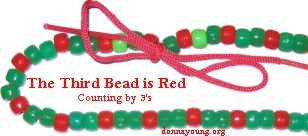
- String Beads (math: use colors for skip counting)
Materials
You might need the materials listed below.
- Mixable Paint (watercolors or tempera)
- Paint Mixing Tray
- Paint Brushes
- Drawing Paper
- Painting Paper (white construction paper is fine)
- Glue
- Scissors
- Clay, homemade play dough is fine
- Wire - if sculpting with armature
- Pony beads (or any similarly sized bead)
- Bracelet elastic


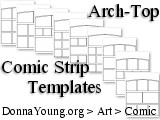 New Set of Blank Comics - "Arch Top"
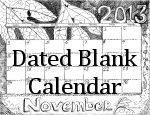 This is an undated "dated" blank monthly calendar.
 Member's Login
 RSS Feed